

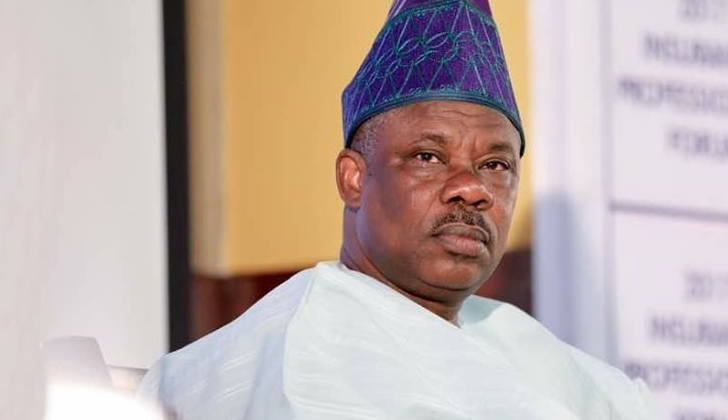
Former Ogun State Governor, Senator Ibikunle Amosun, and former Senate Chief Whip, Senator Ali Ndume, have paid glowing tributes to Nigeria’s founding fathers, describing the late Dr Nnamdi Azikiwe, Chief Obafemi Awolowo and Sir Ahmadu Bello as selfless leaders whose legacies remain a benchmark for good governance and democracy.
They lamented the country’s leadership challenges, saying Nigeria had failed to sustain the vision, patriotism and selflessness demonstrated by the nation’s founding fathers.
The former governors and other political figures spoke on Monday at the 7th Dr Nnamdi Azikiwe Annual Award Lecture held in Abuja.
Amosun said Nigerians enjoyed considerable respect internationally during the era of the country’s founding fathers but had lost that standing because successive leaders failed to sustain their ideals.
The former lawmaker said the problem was not a shortage of ideas but a lack of purposeful leadership.
“Nigerians are who we are. A person will treat you the way you present yourself. When you look at the formation of Nigeria, those giants- yes, we mentioned the three of them, because they represent all three major tribes,” he said.
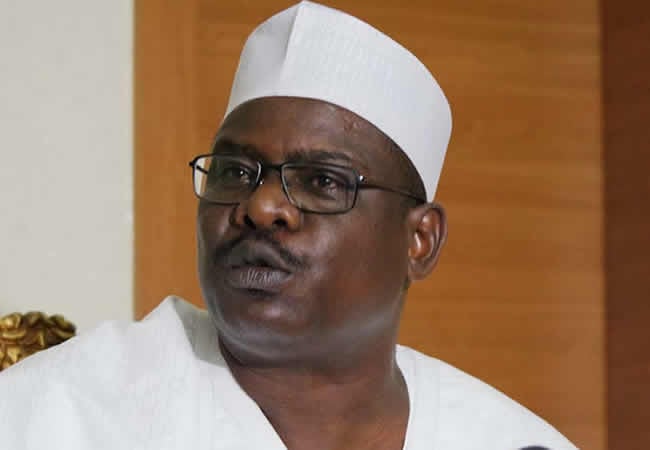
The former governor, who disclosed that he was pursuing a PhD in leadership at King’s College London, expressed optimism that Nigeria could overcome its challenges with the emergence of selfless leaders.
He described Azikiwe, Awolowo and Bello as statesmen who prioritised national development over personal wealth.
“They are statesmen, not businessmen. As some persons said today, we cannot remember Zik, Pa Awolowo or Ahmadu Bello leaving behind huge amount of money for this or that.
“No, what they did was that they served diligently and selflessly. They were not thinking about making money or anything like that. You can’t be both businessman and statesman at the same time. No, you must pick one. And they chose to be statesmen,” Amosun said.
He added that the three leaders remained reference points for good governance because of their commitment to public service.
Similarly, Ndume described Azikiwe as a visionary, intellectual patriot and Pan-Africanist whose contributions to Nigeria and Africa went beyond political leadership.
The senator said Azikiwe, Bello and Awolowo had left enduring legacies despite not amassing enormous personal wealth while in office.
He said their names continued to command respect decades after their deaths because of their contributions to nation-building.
“Let us take these three that I mentioned as a reward for good leadership. All of us believe in God, and this is how God does his things. After all these years, and after so many leadership changes that we have in this country, these three names still shine,” he said.
Ndume lamented what he described as the declining international reputation of Nigeria, recalling how he travelled to the United Kingdom as a student without obtaining a visa but was subjected to a search at the airport during a recent official visit despite holding a diplomatic passport.
He said the founding fathers had laid a solid foundation for Nigeria, adding that the country could have been competing with China, India and Hong Kong if their leadership ideals had been sustained.
READ ALSO:
- Jigawa ADC dismisses leadership change claims
- DR Congo, Rwanda clash over leadership as Francophone summit opens
- School of Creative Leadership unveils exhibition
The former Senate Chief Whip also urged African leaders to build on the political independence secured by the founding generation through economic transformation, democratic stability and technological advancement.
He warned against the personalisation of government, saying Nigeria’s democracy was increasingly serving the interests of a few rather than the wider population.
“Our democracy has been turned into government of some people, by some people, and for some people. It is getting to a level whereby government is being personalised and privatised, and that is where we got it wrong,” Ndume said.
He called for stronger constitutional democracy, respect for the rule of law, protection of human rights and accountability in the management of public resources.
Also speaking, the Action Democratic Party presidential candidate, Aliyu Bin Abbas, described Nigeria as a country in distress, urging political leaders to draw inspiration from the lives and sacrifices of the founding fathers.
“As a Nigerian, I must say that right now, my country is bleeding. Our country is collapsing and sinking. I am speaking like this because I am here to participate in the lecture in honour of a man who played a great role in making Nigeria what it is today,” he said.
Abbas accused political leaders of prioritising personal interests over national development, saying younger politicians must take responsibility for defending the country’s future.
He said his presidential ambition was driven by the desire to challenge the existing political system, which he argued had failed Nigerians.
“We are only against the system because it has not been favourable to anybody,” he added.
In his remarks, the Chairman of the Code of Conduct Tribunal and Secretary to the Board of Trustees of the foundation, Dr Mainasara Kogo, called for national unity, warning against ethnic and religious divisions.
Kogo said the country’s present situation was inconsistent with the ideals Azikiwe stood for, stressing that Nigerians must recognise their common humanity and work towards national cohesion.
He urged citizens to reflect on Section 15(1) of the Constitution, which identifies national unity, faith, peace and progress as the country’s motto.
He said Nigerians must reject ethnic and religious chauvinism if the country was to achieve meaningful development.
Azikiwe, popularly known as Zik of Africa, was Nigeria’s first President, serving from 1963 to 1966, after becoming the country’s first indigenous Governor-General in 1960.
Born on November 16, 1904, in Zungeru, present-day Niger State, he was a leading nationalist whose political activities and advocacy contributed to Nigeria’s struggle for independence.
He died on May 11, 1996.
