

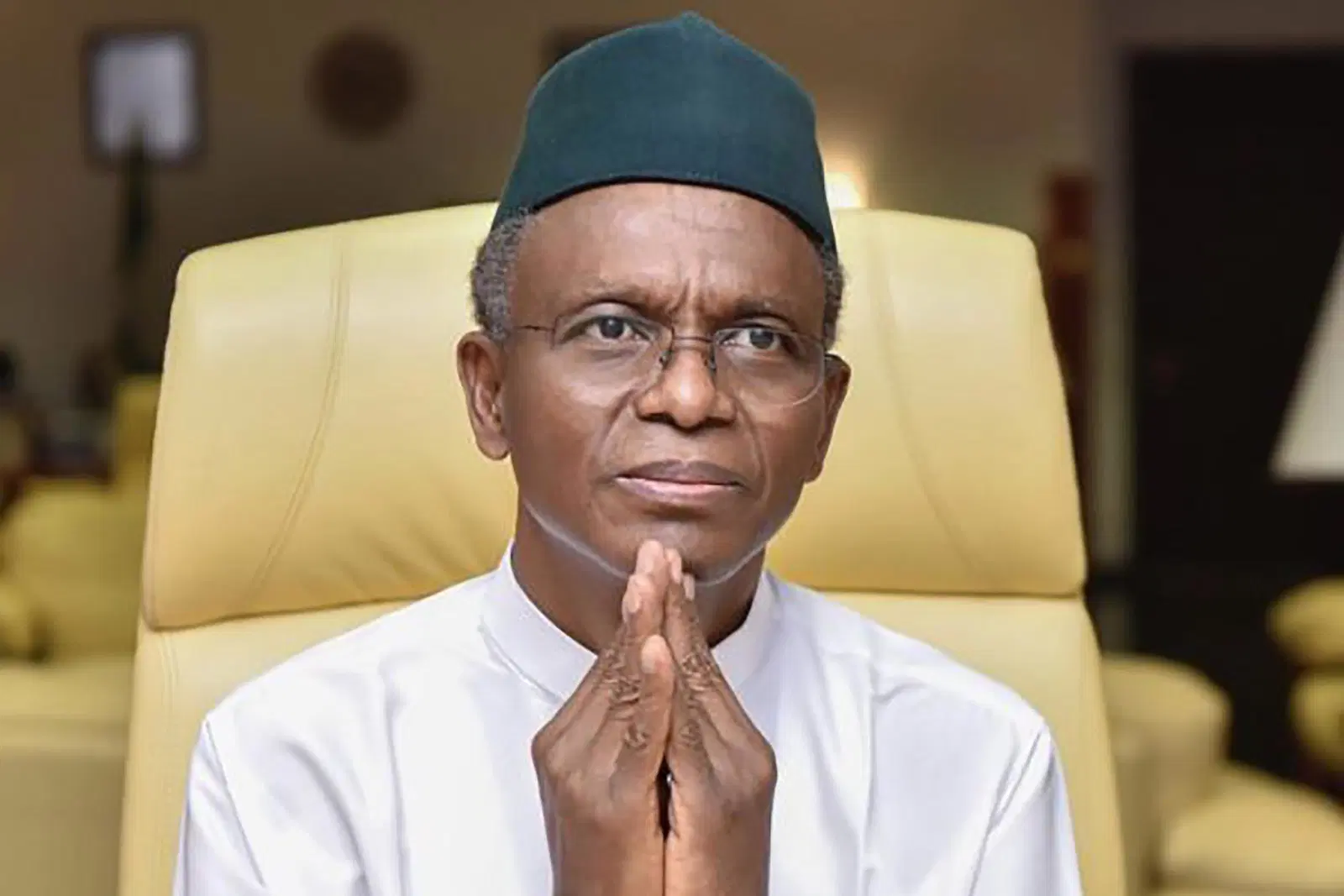
The prolonged detention of former Kaduna State Governor Nasir El-Rufai is increasingly attracting political attention as parties begin positioning themselves ahead of Nigeria’s 2027 general elections.
El-Rufai has been in detention since February 2026 following corruption-related investigations and subsequent court proceedings. His case has generated different interpretations, with some observers believing his absence could benefit the ruling All Progressives Congress, APC, while others contend that the former governor could gain political sympathy from continued detention.
The former Kaduna governor was arraigned by the Independent Corrupt Practices and Other Related Offences Commission, ICPC, in March over money-laundering allegations. He pleaded not guilty.
The controversy has assumed greater political significance because El-Rufai has become associated with the opposition African Democratic Congress, ADC, after previously playing an important role in the political development of the APC.
Some Nigerians have consequently questioned whether the legal case should be viewed exclusively through the lens of anti-corruption enforcement or whether political considerations could also be influencing public perceptions.
Political scientist Dr Kabiru Said Sufi said the answer could ultimately be determined by how ordinary Nigerians understand the case.
Sufi said many people appeared to view the matter as a dispute among political elites rather than an issue capable of producing sustained public mobilisation.
“People seem to be seeing it either as an elitist fight, the latest fight of the elites, or as a fight between the political class,” he said.
He noted that the level of public anger recorded when the detention initially attracted attention had declined.
Sufi also observed that opposition parties had not maintained sufficient pressure on the government over the matter.
“Surprisingly, even the opposition itself has been somehow quiet,” he said.
The political scientist believes the APC could derive an immediate organisational benefit from El-Rufai’s absence because of his experience as a political strategist.
“I think the APC government has smartly moved the issue to the judiciary, passed on the issue to the judiciary, and there is less anger over the issue,” Sufi said.
He added, “For now, the way it will help the APC is that one of the strategists of the opposition has been taken out of the equation.”
However, Sufi stressed that the situation could change if public dissatisfaction with the detention returns.
Read Also: Benue Boat Accident: Many Feared Missing After Vessel Carrying Over 70 Mourners Capsizes
“If the kind of interest and anger we have felt at the beginning had been sustained, then it would have worked against the APC government,” he said.
Political commentator Comrade Aminu Rabiu Kano said the case involved a politician whose influence should not be underestimated.
“El-Rufai is not an ordinary politician. He is a former governor, a prominent northern political figure and one of the politicians who played a significant role in the emergence of the APC,” Kano said.
He acknowledged that the government could argue that the case is simply about accountability and respect for the judicial process.
But he stressed that political perception would remain important regardless of the official explanation.
“Whether that argument is correct or not is a separate question, but politically, perception matters,” Kano said.
He explained that detention could prevent El-Rufai from directly participating in political activities, but that did not necessarily mean his political influence had disappeared.
“Detaining a politician can restrict his physical participation in politics, but it does not necessarily eliminate his political influence,” he said.
Kano also warned against assuming that Northern voters would automatically unite around El-Rufai or the opposition because of the case.
According to him, voters across the North have different political interests and are influenced by security, economic conditions, government performance, candidates, alliances and local political structures.
He said the eventual electoral effect would depend on how voters interpret the proceedings.
“If people predominantly see it as a genuine legal process, its electoral impact may be limited,” Kano said.
He added that a different outcome could emerge if voters begin to perceive the case as politically motivated.
“If, however, a significant section of the electorate comes to perceive it as political persecution, then it could become a useful mobilising issue for the opposition.”
Comrade Umar Muhammad Kofar Naisa, Country Director of SEDSAC, believes the potential consequences for the APC could be more serious.
He argued that El-Rufai’s supporters could develop sympathy for the former governor, with the possibility of that sentiment eventually influencing voting behaviour.
“Continued detention of El-Rufai could hurt the APC, especially because he has many supporters as a former governor. It could generate sympathy among the people, and that sympathy may turn into votes on election day,” he said.
Kofar Naisa further argued that El-Rufai’s political contribution to the emergence of the Tinubu administration should not be overlooked.
“Anyone who knows the history of the Tinubu administration knows that El-Rufai played a role in bringing it to power. His arrest has further damaged the government’s image because people see it as going after opposition figures,” he said.
He also warned that the detention could have implications within the APC, particularly among members who may become reluctant to challenge government policies.
“Continued detention could reduce the courage of some APC members because they may feel that whatever contribution they make could eventually lead them to the same situation El-Rufai has found himself in if they disagree with the Federal Government,” he said.
Meanwhile, Emir of Kano Muhammadu Sanusi II has questioned whether Nigeria’s anti-corruption campaign is being applied consistently.
Speaking to Channels Television in Lagos, Sanusi referred to El-Rufai’s detention while noting that Nigeria already has institutions and courts responsible for handling corruption cases.
“An example is my brother Nasir El-Rufai who’s been denied bail. He’s been in detention for seven months, not having been convicted for anything,” he said.
As the 2027 election approaches, El-Rufai’s case could therefore remain politically relevant. Its ultimate impact will depend on the length of the proceedings, public perception and whether political parties succeed in turning the matter into a broader electoral issue.
