

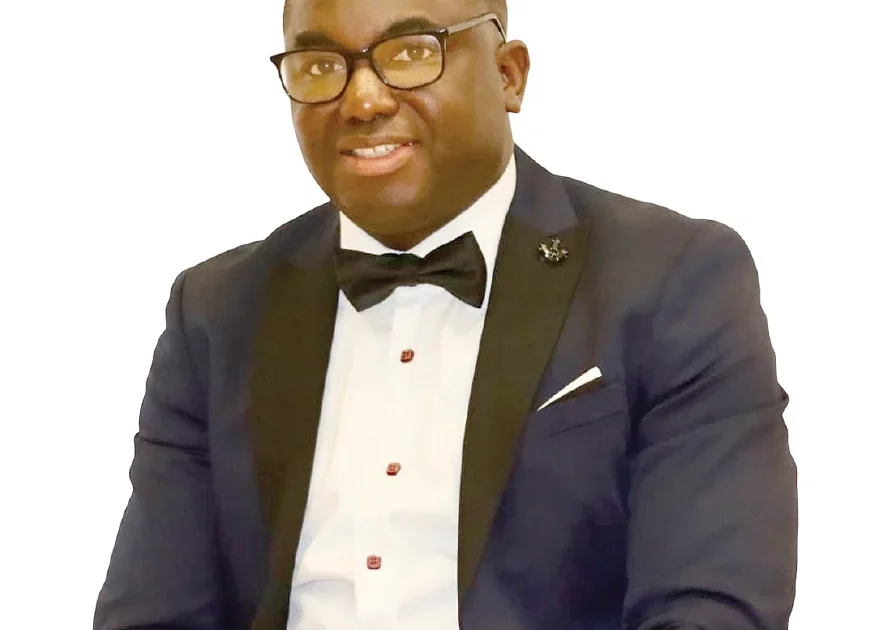
Senior Strategic Supply Chain Manager at the United Kingdom Ministry of Defence, Abimbola Oluwasona, speaks with BIODUN BUSARI about his career, voluntary services, among other issues in Nigerian and British societies
What informed your migration to the United Kingdom?
I’ve lived in the United Kingdom for a few decades now. It wasn’t my idea to relocate. Back in Nigeria, I was very comfortable. I had good education and a great foundation. After completing my education, I was one of those few that was able to get into the labour market, and started a career in the information technology industry. I was able to bounce from one IT firm to one another. I worked with one of the first Internet service providers in Nigeria. Before the Internet became a thing, we were using dial up services. So, I was privileged to be in those environments. I had career progressions, but in the later part of my life, I lived in one of the most cozy areas in Nigeria, Victoria Island. In all that, I didn’t see a need to travel. However, after I got married, my wife brought the idea, and I said we should give it a try if that was what she wanted. For the first 12 months of living in the UK, I was on a sabbatical from my last employer in Nigeria. I was on study leave.
You were in the IT industry in Nigeria, so how did you transition into the British defence logistics system?
This is why it’s important to value whatever skills you have in life. There’s no skill set that is lost. You must see where to apply the knowledge. I was enlisted into the British Army. But, as an IT specialist, my line of work then was logistics. The logistics or supply chain management I was into required a lot of IT skills. So, I was able to carry my knowledge, skills, and experience I’ve always had from my past life into that space. It became very easy for me to integrate my IT skills into supply chain management, bearing in mind that I would forecast, and use predictive analysis to understand inventory. All this required a technology system that I had passed through in different parts of IT from networking to software development. It became seamless for me to thrive in that space using software as an application to manage supply chains. So I had a bridge of two careers in IT and logistics.
You have the recognition of being a Member of the Most Excellent Order of the British Empire (MBE), was it an honour because of your career in the defence ministry?
I’m humbled to have been considered for a national honour in the UK. It was a very rare privilege. Services are one of the things that bring recognition to a man. When you bring yourself to the heart of service, honour follows. I’ve engaged myself in services to my community, the nation and other environments I find myself in. When you give yourself to selfless service, one day somebody will notice the work you do and that could lead to that kind of recognition or awards. You just have to do what is important with passion. So, apart from my career, there are other things I am very involved with. I like innovations. I love to make changes in the environment. I volunteer to lead in terms of school governance. For example, I served as governors of several schools. I hope to become a chairman of a governing body because every school in the United Kingdom must have a governing body. The governing body is responsible for setting strategic direction for that school, whether primary, secondary, or even at the tertiary level. So I was involved in many of those activities. From my background as a Christian, I was also involved in a lot of youth development in the UK. I was involved in mentoring the young ones, making sure that they can stay focused and fulfill their purpose. In my work environment, I was constantly looking for ways where the Minister of Defence can reach back into the black community, for example, to ensure there’s opportunity for our people to serve in defence.
Some European and North American countries are implementing stricter immigration rules, and Nigerians still want to relocate for better opportunities. Do you think it’s greener on the other side?
A young man reached out to me here in the UK and asked me this question. He had a job offer in Nigeria and wanted me to advise whether he should go or stay back. I said, if you’re looking for that answer, you’re not going to get it from me.
Everybody’s circumstances are different. You have to look at your journey. If you live in Nigeria as a bank manager, and want to come to the UK as a carer, you should ask yourself questions. You should think about the outcome in terms of career, finances, family and whether there’s an opportunity back for you to return. If you earn that money, and pay for all the bills like electricity, gas, and rent, what do you have left? So, if you’re relocating, what are you going there to do? Have you got a job? Are you going to be a professional? Or you just want to run away? Why is that? What is your motivation? People have lived in Nigeria and they have done well. I have a friend who now controls a group of companies in Nigeria. He has travelled all over the world and he has never applied for a permanent residency anywhere in the world.
Why? Because he is doing well for himself. We started together as employees in Nigeria, but he works with Europeans currently because he believed in his ability. The reason why the foreign countries are tightening their systems is because they think there’s pressure on their systems. They are not producing anything for the economy to grow. Many people are coming in to use their resources. As a result, they want to shut it down. Once you become a citizen of those countries, you are entitled to so many things within the system. And they don’t want that to happen again. Someone may ask, but you’re there, but my response is that I’m coming back to Nigeria. Why do you want to be a carer? I’m not saying it’s a bad job for some people. But why would you, as a bank manager, come here and then go to a place where you’re just wiping somebody’s bums?
You mentioned mentoring youths. How do you think Nigerian youths can effect positive changes?
To make a change, you don’t have to be confrontational. You must have hope, focus, resilience, and understanding of the system. To make a very meaningful change, you have to be part of the process. That is one of the reasons why, as a person, I’ve lived here in the UK for the time I’ve been here. At some point, I looked for avenues to reach back home, to give back to the country where I was born. What I did was join a Nigerian community called the Nigerians in Diaspora Organisation. The NIDO gave me the platform to have access to the right places in Nigeria whether it’s the ministries, departments and agencies.
Through that organisation, we were able to do a lot of collaborative work in terms of bringing change back home.
Has it been perfect? No. Has it been rapid? No. But we are positive thinkers. We believe that by positive engagement, we have opportunities to influence policies, to contribute to white papers, to write to different ministers about health changes that need to be implemented. One of the big innovations we contributed to is this digital passport application system. Everyone can capture their biometric data at home. We had to write to the Minister of Interior to make sure that these changes were effective.
So, Nigerian youths can engage in voluntary services, or participate in local government politics or even operate by bringing private sector initiatives. You can work with organisations like Foreign, Commonwealth and Development Office or Department for International Development. They are everywhere in Africa and they are looking for projects, where people in diaspora want to give back in Africa. They provide platforms for you to do that. And, these things are sometimes very funded if the idea is something that is needed back home. In other words, you’ve got to identify a problem area that nobody else has done something about.
There are a lot of systemic setbacks, how can the younger generation break that through politics and governance?
Join grassroots politics. Let the youth with transformational initiatives go to their grassroots politics and engage until the systemic changes they desire are achieved. Imagine if youths occupy all 774 LGAs to be councilors of their wards, the country will begin to feel the impact. Register as a party member. Don’t wake up and want to go to the National Assembly one day. Just imagine, every youth who has ambitions and aspirations to influence this place, they go to every of the local government council and contest for local government positions and then they take over these positions. What do you think is going to happen? It’s going to be phenomenal, because the funds coming from the Federal Government will then reach the local governments. They can solve their local problems in their local communities, which in a collaborative sense will influence that local government. And when every local government is sorted, then the state is sorted. Gradually, the nation is sorted. So development we need is required at the grassroots, especially systemic change. Everybody wants to change things from the federal government but it’s not going to work that way. So those educated people who want to make changes are the ones to do that.
How has it been managing the Nigerian community in Europe as the secretary general?
I have a very big reservation for Nigerian communities. We are who we are. Nigerians, we are very unique in our nature. Sometimes, we become very difficult to manage because everybody has an opinion. One of the lessons that I picked up very quickly, and this is one of the things that has affected Nigeria as a nation for a very long time, is the lack of respect for due process. I will give you a very practical example. When the government of the UK wanted to change the immigration rules, some people were not happy with the changes that were about to happen. Then what they did was to petition. The petition then is to receive signatures from at least 10,000 people. As I speak to you, that petition has reached about 140,000 people. It must be listened to or heard at the parliament. That is a process in place. If you have grievances, even within organisations, then there are processes and procedures to follow, and you have to trust the system to address those issues. But the problem in our community is that everybody wants to voice their opinion. And they want to make sure that what they have said is final. That’s not the way things work. You can have your opinion, but it doesn’t mean that your opinion will override the remaining 199 people if there are 200 people. Leaders have to observe the thoughts of the majority and act accordingly. But confrontation is one of the major issues that is stopping us from making reasonable progress. And that’s my experience working with our people. But, we’re getting better at it. We’re getting better at holding conversations now to ensure we can respect other people’s opinions without becoming an attack to others.
