

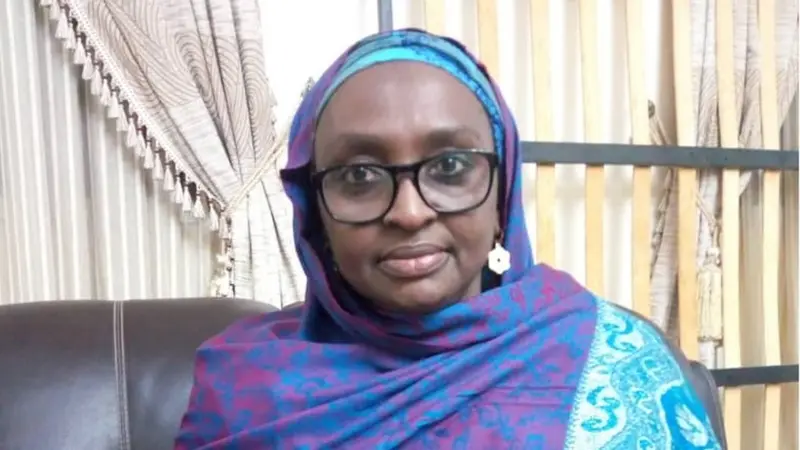
Former Minister of State for Education, Aishatu Dukku, has said parents should bear the primary responsibility for ensuring that their children receive formal education, arguing that government intervention should complement, rather than replace, parental responsibilities.
Dukku said that, notwithstanding poverty and other socio-economic challenges, parents must take responsibility for their children’s upbringing and education instead of allowing them to roam the streets.
She spoke on Saturday at the 2026 Biennial Dialogue, Lecture, Dinner, Awards and Recognition Ceremony organised by the Barewa Old Boys’ Association, Gombe State Chapter.
The event, which attracted prominent personalities, government officials and members of the association, focused on the theme, “The Scourge of Out-of-School Children in Nigeria and the Implications for National Security and National Development.”
Dukku said, “Why is it that you have produced a boy and you are unable to take care of that boy, and you refuse to send that boy to school and you allow the boy to roam the street?
“When you come back, that is the hadith of the Holy Prophet Muhammad Sallallahu Alaihi Wasallam. I agree there are challenges of poverty, yes, but the responsibility is a parental issue.”
She argued that addressing the out-of-school children crisis required educating parents about their obligations before expecting the government to take over the responsibility.
“Whether we like it or not, we must educate the parents first, let them know their responsibilities, and then the government can come in to help.
“That is my own deep belief. I never agreed with the fact that out-of-school children are a government responsibility. No and no and no. It is not a government responsibility. It is a parental issue,” she said.
The former minister, however, raised concerns about the fate of graduates who remained unemployed several years after completing their education, warning that the absence of economic opportunities could expose young people to criminality, extremism and drug abuse.
“Your Excellency, we are talking about the out-of-school children. The next problem is, what have we done with those that have graduated?
“Right now, I have seven graduates that graduated five to seven years ago. They have no job, and some of them are even thinking that they should join, if there is anything more than Boko Haram, they would even want to join, and some of them have resorted to drug addiction. What are we doing about that?” she asked.
Dukku commended the Barewa Old Boys’ Association for drawing attention to the challenge, stressing that the millions of unemployed graduates also required urgent intervention.
On his part, Gombe State Governor, Muhammadu Yahaya, who is also Chairman of the Northern States Governors’ Forum, described the out-of-school children crisis as a development emergency and national security concern requiring coordinated action across the country.
The governor said Nigeria had an estimated 18 million children outside the formal education system, with Northern Nigeria bearing a disproportionate share of the burden.
He identified poverty, insecurity, inadequate educational infrastructure and structural inequalities as major factors denying millions of children access to education.
“Behind these statistics are real human stories: children whose dreams are cut short by poverty, girls denied education by circumstances beyond their control, and young boys growing up on the streets without the knowledge and skills needed to build their future,” Yahaya said.
He warned that educational exclusion perpetuated poverty, undermined economic productivity and increased young people’s vulnerability to criminal exploitation and extremist tendencies.
“We must therefore recognise that the out-of-school children crisis is not merely an educational problem. It is a development emergency and a national security concern,” he said.
Yahaya stressed that while security operations remained necessary to confront immediate threats, sustainable peace could only be achieved through investments in education, economic opportunities and community development.
He called for a comprehensive strategy to expand access to quality basic education, improve school infrastructure, recruit qualified teachers and strengthen vocational and technical education.
The governor also advocated stronger collaboration among Northern governors, traditional institutions, religious leaders, parents and development partners to address the crisis.
Reflecting on the historical contribution of Barewa College to Nigeria’s leadership and development, Yahaya said the institution demonstrated how investment in education could transform individuals and society.
He suggested that Northern states should consider establishing institutions modelled after Barewa College to expand access to quality education and promote unity among young people across the region.
The governor also emphasised the need to prioritise basic education, noting that governments must look beyond establishing tertiary institutions to strengthening the foundation of the educational system.
He disclosed that Gombe State had constructed about 400 primary schools under his administration and was working to improve teacher training and recruit qualified teachers.
Yahaya further stressed the importance of ensuring that children who returned to school remained there long enough to acquire meaningful knowledge, complete their education or develop relevant vocational skills.
He said, “It is not just in getting them off the streets and returning them to school. It is to ensure that they qualify and get the skills and other education that they desire.”
The governor warned against allowing discussions and policy recommendations to end without concrete implementation, urging the association to use its extensive network of influential members to support scholarships, mentorship, advocacy and partnerships.
“Actions that follow discussions in forums like this are what matter. So, there is a need for us to provide this strategy,” he said.
Yahaya, speaking in his capacity as Chairman of the Northern States Governors’ Forum, pledged to present recommendations from the dialogue for consideration as part of the collective efforts of Northern governors to tackle the crisis.
He maintained that poverty, insecurity and educational exclusion reinforced one another, insisting that breaking the cycle required sustained and coordinated interventions.
“The greatest investment we can make in the future security and prosperity of Nigeria is to ensure that no child is left without education or a skill that can reduce them,” the governor said.
In his welcome address, the National President of the Barewa Old Boys’ Association, General Alwali Kazir (retd.), said the growing number of out-of-school children should not be treated as an exclusively educational challenge but also as a developmental, social, economic and national security concern.
He cautioned, however, against labelling out-of-school children as security threats, describing them instead as vulnerable children whose circumstances demanded urgent attention and intervention.
Kazir called for reliable data to identify children excluded from education, improved access to basic education, safer schools and interventions tailored to the realities of different communities.
He also advocated collaboration with traditional rulers, religious leaders, parents and community organisations to encourage school enrolment and retention.
The BOBA president said the association would contribute through mentorship, scholarships, advocacy and partnerships aimed at expanding educational opportunities for disadvantaged children.
He urged members to translate the association’s concern into practical interventions, stressing that the education of Nigerian children was a shared responsibility.
