

The Nigeria Customs Service has unveiled plans to strengthen intelligence-driven enforcement through the deployment of artificial intelligence, advanced scanners and electronic cargo tracking systems to tackle smuggling, internal corruption and other emerging security threats.
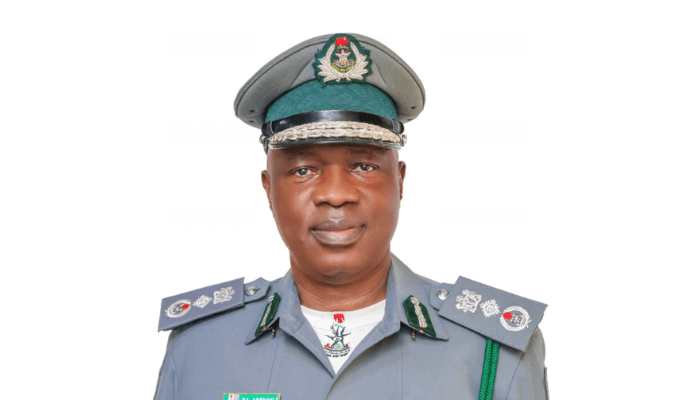
The Comptroller-General of Customs, Bashir Adeniyi, said the service must move beyond conventional enforcement methods and embrace technology, stronger inter-agency collaboration and professional policing to address increasingly sophisticated criminal networks.
Adeniyi also warned that customs officers must be held accountable for their actions, insisting that the exercise of police powers must be guided by the law, restraint and respect for human rights.
He stated this at the inaugural Customs Police Summit 2026, organised by the Customs Police Unit held on Thursday in Abuja, where he outlined measures to reposition the unit for more effective internal discipline and border enforcement.
He said criminal networks were becoming increasingly sophisticated, exploiting legitimate trade routes to move firearms and their components, narcotics, counterfeit medicines, protected wildlife and illicit funds, often through digital channels.
“I stand before you in two capacities: as Comptroller-General of Customs and as Chairperson of the WCO Council. From both positions, one truth is clear. Customs must facilitate legitimate trade and stop illicit trade and it can do neither without a disciplined and trusted police unit to uphold its own standards.
“Our history teaches three lessons. First, charity begins at home. Before we demand integrity from traders and the public, we must show it ourselves. Second, authority requires restraint. The NCS Act 2023 gives us police powers, but every search, arrest and detention must rest on lawful grounds and withstand public and judicial scrutiny. Third, enforcement in isolation fails. Coordinated initiatives such as the One-Stop Shop have shown that enforcement and facilitation work best together.
“Criminal networks have grown more sophisticated. They use the same routes as legitimate traders to move firearm components, narcotics, fake medicines, protected wildlife and illicit funds, often through digital channels.
“Our answer must be smarter, not harder. WCO instruments such as the SAFE Framework, the Authorised Economic Operator programme, advance rulings, the Time Release Study and the Revised Kyoto Convention reward compliance and free officers to focus on real risk. They also reduce the room for abuse and corruption,” he said.
The Customs chief stressed that technology would play a central role in improving intelligence gathering, investigations and operational efficiency.
He identified the service’s B’Odogwu digital platform, which integrates declarations, valuation and risk management processes, as well as the INTERPOL Data Centre at the Customs Headquarters, as important tools for strengthening intelligence-led operations.
However, he cautioned against allowing technology to replace human judgment and established legal procedures.
“Algorithms may flag risks, but only officers acting within the law can exercise enforcement powers, with audit trails, data protection and human oversight at every step,” Adeniyi said.
He also called for a review of some of the Customs Police Unit’s original responsibilities introduced in 2019, particularly the monitoring of containers in transit.
According to him, technological developments have provided better ways of tracking cargo movements, making it necessary for the unit to reassess its traditional operational responsibilities and identify areas where modern systems could improve efficiency.
READ ALSO:
- New Ogun Customs boss warns officers against indiscipline
- Kaduna clash: Police dismiss religious claims, deploy operatives
- Immigration boss warns newly promoted comptrollers against abuse of office
Adeniyi said the Customs Police Unit must also strengthen internal accountability, noting that the service could not demand integrity from traders and members of the public without demonstrating the same standards among its personnel.
He recalled that customs administration in Nigeria dated back to 1891, while preventive enforcement arrangements were established in 1945.
The Customs Police Unit was inaugurated in July 2019 to investigate erring personnel, prevent crime and ensure compliance with established regulations.
He maintained that the founding principle of the unit remained that no officer was above the law.
“The NCS Act 2023 gives us police powers, but every search, arrest and detention must rest on lawful grounds and withstand public and judicial scrutiny,” he said.
The Comptroller-General outlined three strategic pillars for strengthening the unit: consolidation, collaboration and innovation.
He explained that consolidation would involve establishing clear procedures for arrests, detention and investigations, improving case-file management and ensuring continuous professional development.
On collaboration, he called for stronger partnerships with the Nigeria Police Force, Armed Forces, National Drug Law Enforcement Agency, National Agency for Food and Drug Administration and Control, Department of State Services, Independent Corrupt Practices and Other Related Offences Commission, Economic and Financial Crimes Commission and other relevant agencies.
He said no single institution could effectively defeat illicit trade without sustained cooperation and intelligence sharing.
Adeniyi urged participants to develop a comprehensive Customs Police doctrine anchored on the Nigeria Customs Service Act 2023 and the Revised Arusha Declaration.
Earlier, the Deputy Comptroller-General of Customs and Provost Marshal, TS Sanusi, stressed the need for professional standards, transparency, ethical conduct and anti-corruption measures.
Also speaking, the Assistant Comptroller-General of Customs, Shuaibu, said the unit remained critical to national security, internal discipline and the protection of the service’s institutional reputation.
He called for stronger internal controls, impartial investigations and consistent enforcement of disciplinary standards.
The summit is expected to produce recommendations on joint operations, intelligence sharing, responsible use of artificial intelligence, evidence management and specialised training for Customs Police personnel.
