
I’m no longer interested in struggling for political positions – Former Ogun deputy gov, Kaka

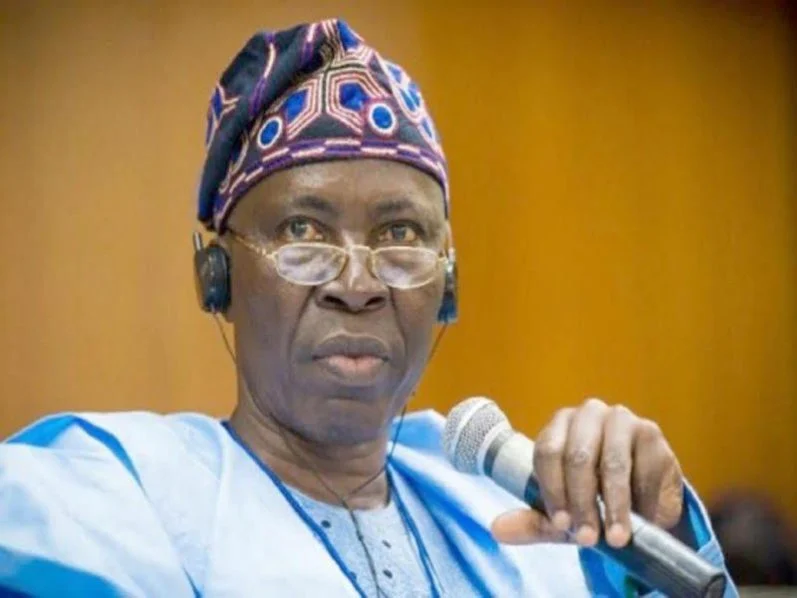
Former Deputy Governor of Ogun State, Senator Adegbenga Kaka, tells PELUMI KAZEEM about his childhood, family, career, political journey and the lessons life has taught him
What was growing up like for you?
I give glory to Almighty God for what He has done in my life. Let me share something about my early life that was beyond my comprehension.
My mother was my father’s third wife. The first three children she had died as toddlers. When the third child died, two days before Eid al-Fitr, my mother was so devastated that she decided to leave my father’s house. She packed some of her belongings and went to her father’s house because she could not understand why she should remain in a household where the other women were nursing their children while she had lost all three of hers.
When my father returned from the Eid celebration and discovered that she was no longer at home, he went to my maternal grandfather to plead with him to allow her to return. My grandfather insisted that she should go back to her husband, saying that God would give her more children in that same house.
She eventually returned, and I was born afterwards. However, my childhood was not easy. I suffered from various ailments, and several interventions were made. Local remedies, Quranic interventions and even Christian and Aladura interventions were tried before I eventually grew strong enough to attend school.
Tell us about your educational trajectory
I was not particularly conscious of what was happening around me when I started primary school. I kept getting promoted on trial until I reached Primary Five. My father eventually said the practice had to stop and insisted that I repeat the class instead of proceeding to Primary Six.
After completing primary school, my father insisted that I must finish reading the Holy Quran before going to secondary school. My mother, however, was determined that I should further my education. Eventually, I completed the Quran and gained admission into three schools: Ijebu College, Ijebu-Ode; Ijebu Muslim College; and Grammar School, Ijebu-Ode.
My father preferred Ijebu College, but I did not want to attend the school. My mates were already in higher classes, and I was uncomfortable with the thought of returning to a school where I would be junior to them. I was also worried about living in a polygamous household.
I eventually found a way to convince my father to allow me to attend Ijebu Muslim College. I had noticed that there was a piggery at Ijebu College and that some students told us they were served pork on Sundays. I went to my father and asked whether he wanted me to complete the Quran only to attend a school where I would eat pork. He was furious and slapped me, calling me a liar. However, after making enquiries, he eventually agreed that I could attend Ijebu Muslim College.
I initially opted for Mathematics, Physics and Chemistry, but we experienced a shortage of teachers, which affected my studies. I later switched to Biology and eventually encountered difficulties with my Higher School Certificate examinations.
I wanted to study Medicine because of my uncle, but my academic results did not make that possible. I eventually gained admission to the University of Ibadan, where I studied Agriculture and later specialised in Animal Science. I subsequently obtained my second degree from the University of Lagos.
What is one childhood experience that has remained memorable to you and perhaps shaped the person you are today?
The death of my father remains one of the most defining experiences of my life. He died in October 1968, when I was in Form One at Ijebu Muslim College. He was only 52.
A few days before his death, he had sent someone to pay the balance of my school fees. He later complained of neck pain and insisted on going to the hospital. Before leaving, he brought out the clothes he had prepared for his burial and arranged them on his bed.
He initially appeared to be recovering in the hospital. However, on the morning he was expected to be discharged, he complained of thirst. Those around him offered him tea instead of water. After taking a few sips, he suddenly slumped and died before the doctor could reach him.
His death marked the beginning of a difficult period for me. My mother had six other children after me, including twins, and I was suddenly faced with an uncertain future. I did not know whether I would be able to continue my education.
Fortunately, my uncle, who had returned to Nigeria the previous year, visited my mother and asked about my education. He requested to see my results and was impressed by my improvement. I was then 40th in my class. He invited me to spend part of my holiday with him in Lagos and gave me my school fees and pocket money before I returned to school.
That was how he began supporting my education. Knowing that dropping out could affect my future, I became more determined to do well. I had moved from 110th position in my first term to 87th and then 40th. In Form Two, I came 18th, 16th and 18th in the three terms. In Form Three, I was ninth, third and sixth.
A senior student also contributed to my improvement. I was playful and often slept during prep hours, so he would wake me up and insist that I study. Sometimes, if I refused to stay awake, he made me sleep on the bare floor. I thought he was being harsh at the time, but I remain grateful to him because he helped me develop the discipline I needed.
What were your dreams growing up?
My initial ambition was to study Engineering. At one point, I considered Veterinary Medicine, but it was a six-year programme. I had already become conscious of the responsibilities waiting for me, especially the need to support my younger siblings. I therefore decided to study Agriculture and complete the shorter programme. I graduated with a second-class upper degree.
Did you ever imagine that you would venture into politics and eventually occupy prominent public offices?
I did not set out with the intention of becoming a politician. My entry into public service came later, after I had worked with Pfizer Livestock Feeds. I was eventually appointed a commissioner by the military governor of Ogun State.
Who had the greatest influence on your life while growing up?
My mother and uncle had tremendous influence on my life. My father also played an important role in my early upbringing, particularly through his insistence on discipline and education.
My uncle sacrificed a lot for us. He became a structural engineer and rose to the position of Deputy Director of Works in the Federal Ministry of Works. After returning to Nigeria, he took an interest in my education and supported me through some very difficult periods.
My mother was also hardworking and highly disciplined, even though she had no formal education. My uncle was a Christian, while my mother was a Muslim, but both taught me important values. They did not tolerate indiscipline or irresponsibility. My mother would not spare me if she discovered that I was associating with irresponsible older people or peers. She made sure I worked and took responsibility at home.
What important lessons did they teach you?
I learnt discipline, hard work and contentment from my mother and uncle. I remain grateful to both of them, particularly my uncle, for the sacrifices they made.
Many people know you as a former deputy governor and senator, but who is Sefiu Adegbenga Kaka away from politics and public attention?
I am a reserved and highly disciplined person. I do not like blowing my own trumpet, but I try to be factual about myself.
There was a time some elderly people organised a meeting and invited me. They advised me to learn how to tell lies if I wanted to progress further in politics because they felt I was too truthful for their liking. They loved me, but they thought my honesty could limit my political progress.
I told them that I was already over 40 and it was too late for me to change my way of life.
Some people also describe me as an arkagon, meaning someone who does not like spending money.
I consider myself disciplined, composed and contented. I am comfortable among elderly people, and I have had the opportunity to mentor younger people. Interestingly, some elderly people also seek my opinion before making decisions.
What are some things people often misunderstand about you because of your political background?
In political settings, social circles and even within family structures, people generally do not like discipline. I would not claim to be perfectly disciplined, but when it comes to discipline, comportment and contentment, I believe I stand out among my peers.
I also have a habit of pursuing whatever I set my mind to achieve. There may be difficulties along the way, but once I decide to do something, I keep working towards it until I achieve my goal. I give the glory to Almighty Allah because I know it is not entirely through my own efforts.
What does a typical day look like for you when you have no official engagements?
There was a time I attended parties regularly. I would accept as many as eight invitations in a day and attempt to make an appearance at all of them.
However, in the last 10 years, I have stopped attending parties regularly and have gradually withdrawn from that lifestyle.
For the past 35 years, I have run my own poultry farm, which usually occupies my time. There was a time I would get to the farm as early as 7 am and sometimes remain there until about 6 pm. It became part of my daily routine. I am gradually slowing down now, but the poultry farm is still there. I also engage in other businesses that generate income.
What kind of music, artistes or songs do you enjoy listening to?
I enjoy indigenous music. I listen to artistes such as Haruna Isola, Yusuf Olatunji, popularly known as Baba Legba, Ayinla Omowura, Ebenezer Obey and Fela Anikulapo-Kuti, among others.
When I drove regularly, I enjoyed listening to music alone in my car. My companions were my cassette tapes and, later, my discs.
What are some of your favourite ways to unwind?
Driving used to be one of my hobbies until my body began to reject its demands. I also enjoyed travelling and exploring different places, particularly during my National Youth Service Corps year.
I was posted to the then Anambra State, now Ebonyi State, and I took advantage of the opportunity to visit other places, including Calabar, Port Harcourt, Kano and Imo State. I was interested in exploring and learning about other people and their cultures. I also picked up bits of different local languages along the way.
READ ALSO:
- 2027: Money can’t buy Ogun voters, says PDP deputy gov candidate
- BREAKING: Court orders INEC to reinstate Adebutu as Ogun PDP gov candidate
- Ogun ADC insists on elected leadership, warns against political interference
Is there a hobby, personal interest or activity you enjoy that might surprise people?
My involvement in farming may be one of the things people do not readily associate with my public life.
I also take an interest in the welfare of people around me. Beyond my immediate siblings, I have supported the children of neighbours and members of my extended family. I am willing to help anyone prepared to embrace the kind of discipline I believe in, regardless of their religion.
Has your approach to family life changed over the years?
Naturally, one’s approach to family life changes over time. I have had to make sacrifices to ensure that my family and siblings were properly taken care of.
At a particular time, eight of us were in school simultaneously, and we all depended on the single job I had with Pfizer Livestock Feeds. It was a major responsibility, but I was determined to see everyone through.
My first two children from my first marriage are doing well. My first son was preparing for his convocation after obtaining a PhD in Economics and Management at the time of this interview, while his elder sister was also expected to obtain her PhD between December and January. My children from my second marriage are also doing well, and I am proud of all of them.
They are reserved, well-behaved and contented. My wife and I have been able to provide for them, and I am satisfied with how they have turned out. I see their progress as a form of compensation from God for the sacrifices I made for my siblings and other people.
How do you balance your responsibilities in public office with your obligations to your family?
When I was approached to become a commissioner, I discussed it with my wife, and she endorsed the decision. My family understood that once I made up my mind to do something, I was unlikely to change it. My children also supported my decisions and gave me the freedom to pursue what I believed in.
I carried them along, and they understood that it was something I had decided to do, so they gave me their support.
I have always been someone who acts once I make up my mind. For instance, when armed robbers invaded our street on some occasions, I would be the one going out at 1 am or 2 am to find out what was happening. My tenants and even my family would plead with me not to go out, but I would still go. Sometimes, a tenant would kneel and beg me to stay indoors.
I believe God has been protecting me. Otherwise, those situations could have ended differently.
I also believe nobody is self-made. Some people claim to have achieved everything by themselves, but they do not understand that even people they regard as enemies can play a role in shaping their lives. Those who detest you may actually be messengers from God, helping to keep you on the path towards your destiny. That is my personal perception.
What are some important values you have tried to instil in your children?
I do not know how they will choose to remember me. They are at liberty to remember me in whatever way they want.
However, I have instilled discipline in them, and I have spent what God gave me to ensure that they receive an education. Whether they appreciate it or not, I see it as my responsibility as a father.
Sometimes, they thank me, and I tell them they have thanked me enough because I am only doing my duty.
I am also grateful for how my siblings have turned out. They are doing well, and whenever I have something to attend to, they are always there to support me.
I cannot forget my uncle, who sacrificed his possessions for our sake. He planted a mustard seed, and it has continued to grow. From my mother and uncle’s descendants, we now have about 30 graduates. In the next three or four years, we may have as many as eight medical doctors in the family. My grandson is already a doctor.
We also have several people who became the first in the family to enter different professions, including agriculture, accounting, law and chartered insurance. These are achievements for which we are grateful to God.
I remain grateful to my parents and, particularly, my uncle for the sacrifices they made to give us the opportunities we have today.
Do you still maintain relationships with friends from your childhood and younger days?
Yes, I make friends easily. A classmate of mine recently said that I have a long leg to reach everybody. I have maintained relationships with my schoolmates and other people I have met over the years.
Once I establish a relationship with someone, I hardly lose that friendship unless I discover that the person is bad. If I find that someone is not good for me, I distance myself. But when we are on the same page, I stand by my friends, whether in good or difficult times.
I do not drink alcohol, unlike some of my friends and contemporaries, but that has not stopped me from maintaining good relationships with people.
What is one personal habit you had to work on over the years?
My feeding habits are not the best. I would describe them as very poor, particularly in terms of what I eat. It is something I am aware of, although I have continued to live with it.
Looking back at your time as deputy governor of Ogun State, what experience stands out as particularly memorable?
My time in public service taught me the importance of respect, firmness and putting the interests of the people first. I served as Commissioner for Agriculture, Land and Housing, alternate Commissioner for Finance and later Deputy Governor, overseeing Local Government and Chieftaincy Affairs.
One experience that stood out was returning to a ministry where some of the people who had interviewed me for a civil service job were now working under me. Although I was only 36 and some of them were old enough to be my father, I respected them but remained firm when making decisions.
I also took my responsibilities seriously, often revising prepared speeches or speaking without a script when necessary. Above all, my loyalty was to God and the people, not those who appointed me. I remain grateful for the opportunity to serve.
Have you ever felt misunderstood or unfairly judged because of your position or public image? How did you handle such situations?
You should expect people to judge you once you are in public life. Human beings naturally tend to focus on negative issues, and sometimes people may initially see someone trying to guide them as an enemy.
People have the right to dislike my way of life or disagree with what I do or refuse to do. However, once I am convinced about a principle, I do not abandon it easily.
Before I make up my mind, you can persuade me if you have convincing facts. I am willing to listen and change my position when the facts are strong enough. But once I am convinced that something is right, nobody can make me accept the opposite, even at gunpoint.
Some people describe me as brutally frank, and I accept that I can be frank. If you do something wrong, I will tell you.
My religion teaches me to speak the truth at all times, even when it concerns my mother, father or siblings. Your fear should be of God, not of any human being.
If you could revisit one decision or experience in your life, would you do anything differently?
Of course, there are many things I would do differently. If it were possible to relive my youthful years, some things would probably have turned out differently.
There are decisions I made out of ignorance or deliberate laxity that I would reconsider if I had another opportunity. I am human, and I am not a saint.
However, there are other decisions I would not change because I believe they were the right ones. Once God has guided you on to the right path, you should not abandon it. But when you make mistakes, there are moments when you look back and wish you had known better.
At this stage of your life, what gives you the greatest happiness?
I am grateful to God for how far He has brought me. I am still achieving certain things, but I am also gradually winding down.
Is there anything you still hope to achieve personally?
Life is a stage, and everyone plays the role assigned to them by God. When the time comes, you take your exit, preferably when the ovation is loudest.
There are people who are 80 or 90 years old and are still struggling for political positions. At my age, I do not see myself struggling for any position. I am already trying to slow down.
My children are doing well, and they are progressive. There is no limit to what they can achieve, and as long as I have the strength, I will continue to support and encourage them to aim higher.
I also believe strongly in public education. All my children, like my siblings and me, attended public schools. I do not believe that a child who attends a public school is inferior to one who attends a private school. There may be differences in exposure, but those can be acquired later in life.
If public officers and the elite send their children to public schools, they will have a stronger reason to improve those schools and make them conducive to learning for every child, regardless of their background or affiliation. When I could not afford to send all my siblings to expensive schools, I helped some of them attend a Grade Two Teacher Training College because the programme was relatively cheaper. They still went on to achieve success.
Nobody is dull. People reach their peak at different times. With patience and the right guidance, you can help anyone find their way to their destination.
