

The Federal Government has called on political parties, government institutions, the media and civil society organisations to strengthen democratic institutions, promote accountability and intensify the fight against corruption ahead of the 2027 general elections.
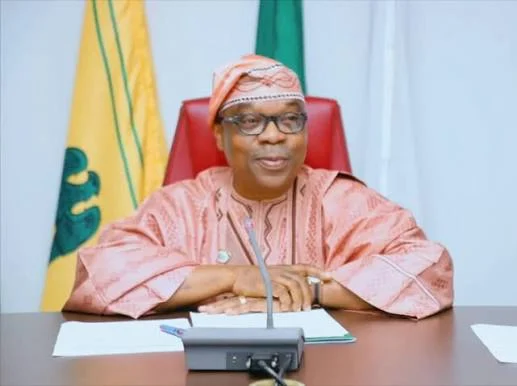
The Minister of State for Foreign Affairs, Ambassador Sola Enikanolaiye, stated this on Wednesday in Abuja through his representative, Mahmud Aliyu, at an international stakeholders’ engagement forum organised by the Diplomatic Correspondents’ Association of Nigeria.
Enikanolaiye stressed that anti-corruption and effective party-building were fundamental to democratic governance, warning that the country’s democratic development required more than periodic elections to guarantee transparency, public trust and responsive leadership.
The forum, which focused on anti-corruption, party-building and democratic governance, brought together political party leaders, diplomats, civil society organisations, government officials and other stakeholders to examine governance challenges and lessons from China’s experience.
Enikanolaiye said anti-corruption and party-building were critical pillars of democratic governance because of their roles in strengthening institutions, ensuring inclusive political participation, upholding the rule of law and promoting transparency.
He said, “Anti-corruption and party-building are fundamental pillars of democratic governance, essential for strengthening democratic institutions, ensuring inclusive political participation, upholding the rule of law, promoting transparency and accountability, and fostering public trust in governance.”
The minister noted that democratic governance went beyond conducting elections, stressing that it also involved protecting fundamental freedoms, maintaining institutional checks and balances and ensuring that public officeholders served the interests of citizens.
He said the principles were consistent with Nigeria’s 4-Ds foreign policy priorities of Demography, Development, Diaspora and Democracy.
According to him, democracy provides the institutional foundation for stability, accountability and good governance, while development translates diplomatic engagements into tangible economic and social benefits.
He explained that Nigeria’s demography positioned its population as a source of economic strength and international influence, while the diaspora connected the country to global opportunities, expertise, investment and innovation.
Enikanolaiye said achieving these objectives required the collective involvement of political parties, the media, civil society groups and government institutions.
Also speaking, the Executive Director of the Civil Society Legislative Advocacy Centre and Transparency International Nigeria, Auwal Rafsanjani, warned that Nigeria’s democratic challenges were rooted not merely in the absence of laws and institutions but in the failure to enforce rules and hold powerful individuals accountable.
He said political interests frequently took precedence over national interests, while political loyalty sometimes overshadowed competence and institutions established to protect public interest remained vulnerable to partisan interference.
Rafsanjani, whose presentation examined party organisation, discipline and anti-corruption reforms ahead of the 2027 elections, called for transparent political financing, credible party primaries and stronger anti-corruption institutions.
He said the increasing influence of money in political competition threatened democratic choice, particularly through financial inducements, expensive political gifts, opaque campaign contributions and the misuse of public resources.
“Those who spend excessively to acquire political power may subsequently face incentives to recover those investments through public contracts, political patronage and misuse of public resources,” he said.
He urged the Independent National Electoral Commission to strengthen its capacity to monitor campaign financing, investigate suspicious donations and enforce disclosure requirements by political parties.
The organisation also called on anti-corruption agencies to investigate allegations of illicit political financing and abuse of public office without discrimination or political interference.
READ ALSO:
- NDC urges opposition parties, Nigerians to scrutinise INEC voter register
- 2027: Disqualify candidates linked to electoral violence, Senate urges INEC
- 2027: Jonathan, Sambo warn against political violence
“The credibility of the 2027 elections will depend not only on how votes are cast and counted, but also on how candidates emerge, how campaigns are financed and whether electoral offences attract consequences,” he said.
Rafsanjani further advocated stronger operational independence for the Economic and Financial Crimes Commission, Independent Corrupt Practices and Other Related Offences Commission, Code of Conduct Bureau, INEC and other accountability institutions.
He maintained that anti-corruption agencies must not be perceived as strong against political opponents and weak against politically connected individuals.
On political party development, the National Chairman of the Inter-Party Advisory Council, Dr Yusuf Mohammad Dantalle, said weak political parties could not produce strong governments.
He called for internal democracy, respect for party constitutions, financial transparency, ideological clarity and capacity-building for party leaders and members.
“Without disciplined, ideologically-driven and internally democratic political parties, democratic governance will remain fragile,” Dantalle said.
He added that the fight against corruption must be collective, non-selective and institutional, urging political parties to embrace transparency in party funding and campaign financing.
Similarly, the Campaign Spokesperson of the National Democratic Congress, Dr Chiogo Constance Ikokwu, expressed concern over the state of internal democracy in political parties and the growing public distrust of the electoral process.
Ikokwu, a former journalist, said her experience in politics had exposed her to shortcomings that were not always apparent from the newsroom.
She said, “It is one thing to criticise the shortcomings of a political system from the newsroom. It is quite another to experience those shortcomings from inside the system.”
She argued that democracy should not be reduced to winning elections, insisting that political parties must respect their constitutions, internal rules and the democratic rights of members.
The National Orientation Agency, in its goodwill message, also called for collective responsibility in the fight against corruption, urging government officials to remain accountable and citizens to reject bribery, dishonesty and misuse of public resources.
The agency said political parties must promote fairness, discipline and democratic principles rather than concentrate solely on winning elections.
The forum also examined China’s experience in party organisation and anti-corruption under President Xi Jinping, with the Centre for China Studies presenting perspectives on how institutional discipline and governance principles could inform Nigeria’s development.
Participants called for stronger institutions, transparent political processes and sustained collaboration among government, political parties, civil society and international partners ahead of the 2027 elections.
