

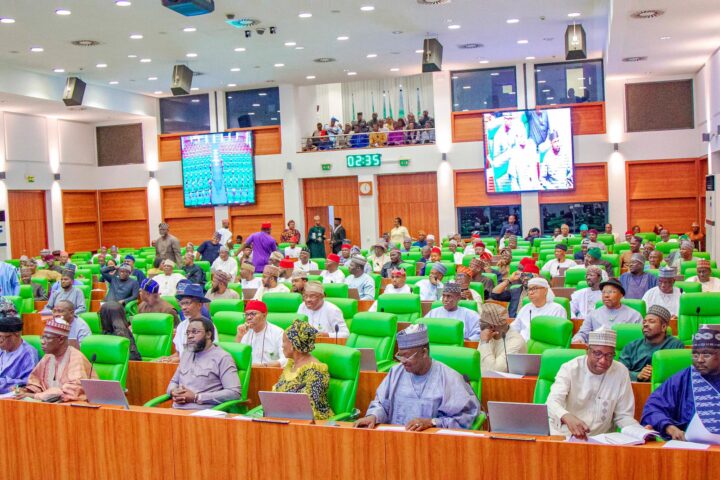
The House of Representatives has resolved to investigate the human and economic losses suffered by Nigerians as a result of recurring xenophobic attacks in South Africa.
The lawmakers also called on the relevant committees of the House to investigate possible means of compensating the victims and recommend stiffer diplomatic measures to protect Nigerians living and doing business in the country.
The resolution was sequel to the adoption of a motion moved by the member representing Ikorodu Federal Constituency, Lagos State, Babajimi Benson at plenary on Wednesday.
The lawmaker demanded a full assessment of the casualties, destruction of property and economic losses incurred by Nigerians during repeated attacks in South Africa.
The development came as the President of the Nigerian Citizens Association in South Africa, Frank Onyekwelu, said South Africans were beginning to feel the economic impact of attacks on foreign owned businesses, it was reported.
In moving the motion, Benson recalled Nigeria’s important role in the struggle against apartheid in South Africa.
He said Nigeria committed huge diplomatic, financial and political resources in aiding South Africa’s liberation from apartheid rule.
But he said he was worried about Nigerians legally living in South Africa who faced xenophobic attacks for nearly two decades despite the historic relationship between both countries.
“For almost two decades, Nigerians legally living in the Republic of South Africa have been victims of xenophobic violence, which has included killings, mob attacks, physical assaults, arson, looting of businesses, destruction of properties, forced displacement, intimidation and hate campaigns mostly directed at African migrants,” said Benson.
The legislator mentioned the major episodes of xenophobic violence that occurred in 2008, 2015, 2017, 2019 and 2021.
“The attacks have resulted in loss of lives and property and diplomatic tensions between Nigeria and South Africa,” he said.
Some of the incidents had led to emergency evacuations of Nigerians from the country, he said.
Read Also: Falz Reveals the Only Politician He Can Endorse
Benson also raised concerns about the resurgence of anti-foreigner campaigns allegedly being promoted by groups such as Operation Dudula, saying the activities had heightened fears among Nigerians and other foreign nationals resident in South Africa.
Meanwhile, Onyekwelu said the economic impact of the attacks was starting to be seen in South African communities.
“We saw closure and destruction of foreign-owned businesses, which made it difficult for some South Africans to have access to cheap goods and services in their communities,” he said on Channels Television.
‘They are beginning to catch up with reality. It’s one thing to tell foreigners to go away. It’s another to deal with the fallout. “We have seen South Africans begging foreign business owners to return because they can’t get affordable goods near where they live,” he said.
Places where foreign- owned businesses were targeted had also been hit, Onyekwelu added, and commercial activities disrupted.
“Many businesses in town centres have closed, money is circulating less and there is much less commercial activity,” he said.
He said the incident is a clear sign that foreign nationals including Nigerians are an integral part of the local economy in South Africa.
‘Nigerians Still Live Under Daily Threats’
“Nigerians in South Africa are still victims of xenophobic attacks even as government authorities and community leaders try to ease tensions,” said the NICASA president.
He said the association received daily reports of threats and attacks through its provincial leadership structures in all nine provinces of South Africa.
“Many Nigerians have lost their homes, their businesses and years of investment having been forced to flee places where they did not feel safe,” Onyekwelu said.
“Some Nigerians were evacuated along with nearly 1,500 citizens from South Africa due to previous attacks and concerns for security,” he added.
He said the Nigerian Consulate in Johannesburg and the Nigerian High Commission in Pretoria had asked Nigerians affected to document and register their losses.
“Documentation would help to keep proper records of the losses and could support future claims for compensation,” he said.
Onyekwelu also cited a recent attack on a Nigerian-owned mechanic workshop on July 5, in which over 25 vehicles were reportedly set ablaze.
“These incidents have continued to cause huge financial losses to Nigerians who invested their savings and years of hard work in South Africa,” he said.
The NICASA president decried the tendency to hold all Nigerians responsible for the alleged criminal acts of a few Nigerians.
“They are being unfairly judged by the actions of a few individuals. “Nationality is not criminality,” he said.
He appealed for the fair treatment of Nigerians and all other foreign nationals and protection from violence regardless of nationality.
Onyekwelu also accused some South African politicians of using anti-foreigner sentiments to gain political support.
Nigerians and other African migrants have been made scapegoats in some election campaigns, making them vulnerable to attacks and discrimination, he said.
Foreign nationals had become “collateral victims” in political campaigns fueled by anti-immigrant sentiment, he said.
