

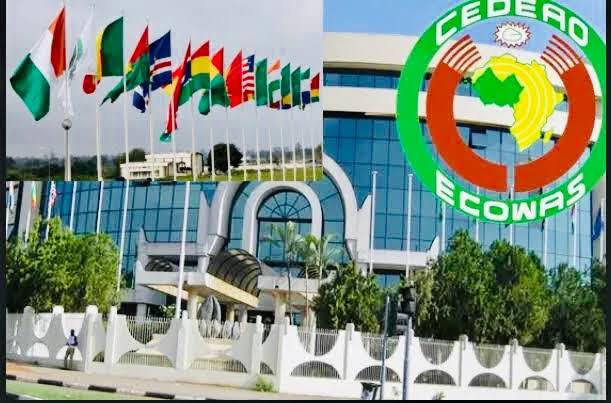
The ECOWAS Commission’s Directorate of Research and Statistics will organize two regional workshops in Abidjan, Ivory Coast from August 18 to 22, 2026 to strengthen the production, quality and harmonization of statistical data in the ECOWAS region.
“This is part of the regional priorities for modernizing statistical systems and is within the framework of the PHASAOC project which aims, among other things, to improve statistical performance, access to data and their use in member states,” ECOWAS said on its website.
The 6th Regional Coordination Meeting on improving the availability, quality and comparability of national data on regional migration indicators will be held at the first workshop on migration statistics.
The proceedings will, in particular, provide an opportunity to review and validate the third edition of the Regional Report on International Migration in West Africa, as well as to promote the dissemination of disaggregated statistics, in accordance with the guidelines of the ECOWAS Council of Ministers.
The second workshop will focus on capacity building for members of the National Coordination Committees and National Economic Policy Committees to operationalize the Common Regional Frameworks for the Compilation and Publication of Macroeconomic Statistics.
This will strengthen multilateral surveillance and support the implementation of the ECOWAS Pact on Macroeconomic Convergence and Stability.
They will also review the updating and populating of the ECOMAC and ECOBASE databases, and the processing and harmonization of national statistics covering the period 2000-2025, so as to ensure their comparability and reliability.
The opening ceremony was attended by the Director General of the National Statistics Agency of Ivory Coast, Mr. Touré Brahima, represented by Mr. Thiékoro Doumbia, Director of Research and Statistics at the ECOWAS Commission, Professor Félix N’Zué, the ECOWAS National Points of Contact, the members of the Technical Working Group on Migration Data, representatives of the ECOWAS Commission’s technical departments, including experts from AFRISTAT, AFRITAC-West, AMAO, IMAO and the UEMOA Commission.
In his opening speech, the President of the National Economic Policy Committee of Ivory Coast, Mr. Hien Sansan, on behalf of Mr. Adama Coulibaly, Minister of Economy, Finance and Budget of the Republic of Ivory Coast, welcomed the various experts present in Côte d’Ivoire.
He stressed the significance of the meeting, which will promote the adoption and effective implementation of regional frameworks for the compilation and publication of macroeconomic statistics needed for multilateral surveillance.
The Director of Research and Statistics of the ECOWAS Commission, Professor Félix N’Zué, who represented the President of the ECOWAS Commission, Dr. Omar Alieu Touray and the Commissioner for Economic Affairs and Agriculture, Dr. Kalilou Sylla, welcomed the participants to the two day workshops.
Vision 2050
The workshops are part of the ambitions of ECOWAS Vision 2050 and the ECOWAS Statistical Policy, adopted by the Heads of State and Government, which recognizes statistics as a regional public good essential for planning, monitoring public policies and assessing progress toward regional integration.
‘Without harmonized, comparable and regularly produced statistics, it would be difficult to objectively assess the progress of our member states, guide economic and social policies and measure the concrete effects of our regional programs. Statistics aren’t just numbers anymore. Today they are a strategic tool of governance, transparency and foresight,” said Professor N’Zué.
Similarly, the Director General of the National Statistics Agency of Côte d’Ivoire, Mr. Touré Brahima, on behalf of Mr. Thiékoro Doumbia, praised the ECOWAS Commission which through the Directorate of Research and Statistics is scaling up initiatives to promote better production and use of statistics in the region.
The ECOWAS Commission reaffirms its commitment to the promotion of reliable, harmonized and accessible statistical data, which are crucial to the development of evidence-based public policies and the strengthening of regional integration.
