

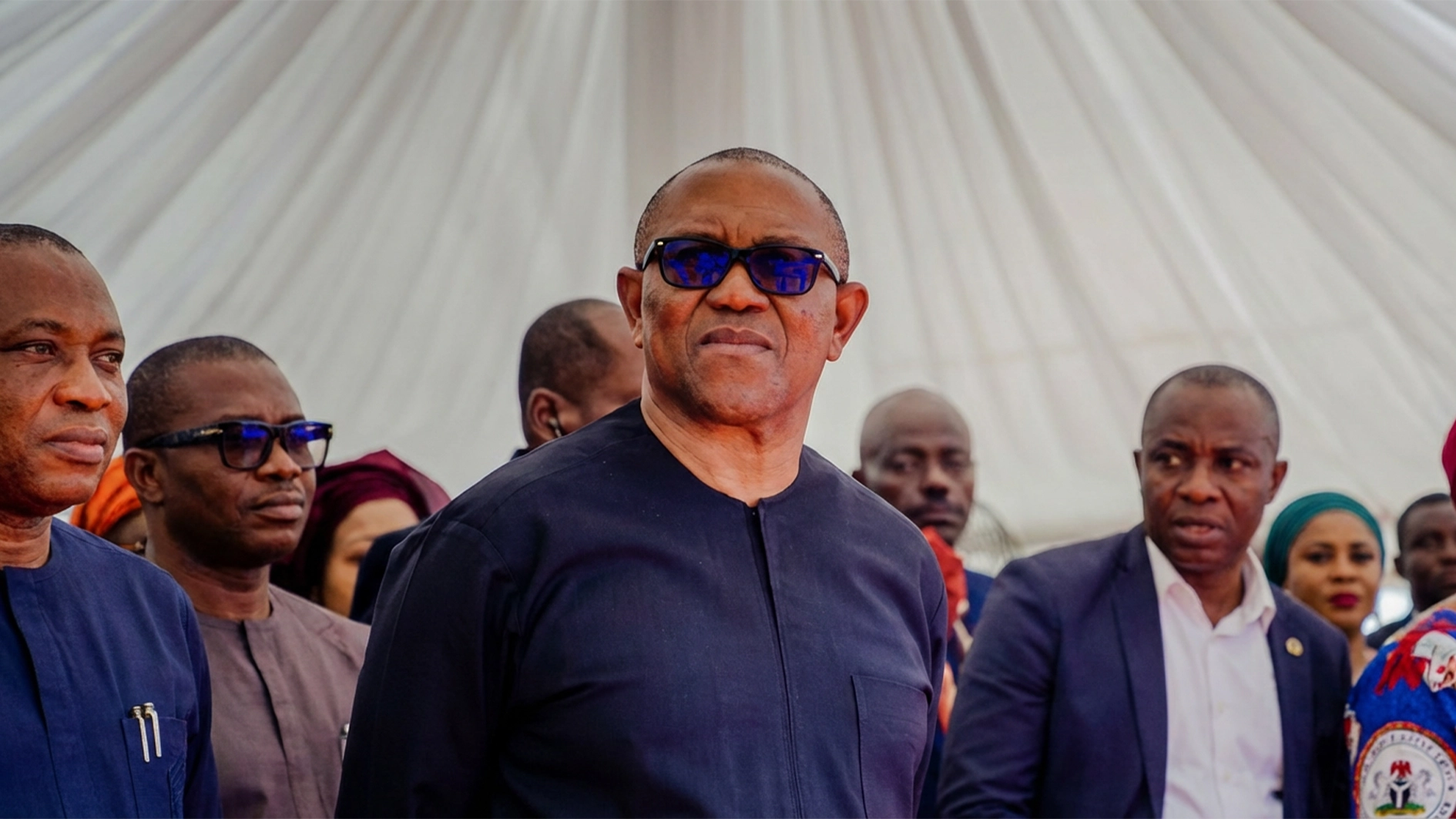
As the campaigns for the 2027 general elections commence, the presidential candidate of the Nigeria Democratic Congress, NDC, Mr Peter Obi has rolled out his plans for Nigerians promising to run a campaign free of ethnicity and religion.
Speaking to journalists at a world press conference in his home in Onitsha, Anambra State on Friday, Obi also gave a blow by blow account of how he will develop the country including his areas of concentration in the various regions of the country.
He said the election is a defining moment for Nigeria’s democracy and gives Nigerians the opportunity to assess the records, ideas and plans of those seeking their mandate to lead their country at a time of grave uncertainty in a rapidly changing world.
Here is part of his text: “I consider myself quite privileged to be one of those who are seeking your mandate to deal with these challenges facing our country. I come to this contest with one unshakable conviction: Nigeria can work, Nigeria must work. Nigeria is facing a number of serious challenges. Some are really existential in nature.
The IMF estimates that 63% of Nigerians – or more than 140 million people – live at or below the national poverty line, while humanitarian agencies estimate that 35 million people will need food assistance in the 2026 lean season. Some 3.6 million Nigerians are internally displaced, largely due to conflict and insecurity.
Every year millions of young people enter the labor market, but far too many struggle to find productive opportunities. Households remain burdened and enterprises constrained by weak infrastructure, unreliable power, insecurity and the high cost of doing business. These are beyond statistics. They reflect the day-to-day realities of Nigerian families, farmers, workers, students and businesses.”
Vowing to run a campaign free of ethnicity and religion, Obi said: “The campaign period is a period of opportunity for every citizen to participate in the national conversation. Nigerians must scrutinize the record and proposals of each candidate; ask tough questions; and seek proof behind every promise.
We must challenge ideas without hatred, compete without violence and disagree without destroying the bonds that unite us. “When Nigerians make their choice that choice must be respected.
“Nigerians should refuse and turn down any campaign that is driven by propaganda, ethnicity, religion, elitism and cronyism. “As my team and I go across the country, we will listen to Nigerians, understand their needs and concerns and assure them that we have the competence, character and compassion to lead and reset Nigeria for the good of all.
Obi, who promised to strengthen the six geopolitical zones, said Nigeria’s diversity was an economic strength. “Nigeria’s diversity is an economic strength. Each region has its own assets and national policy has to unlock those assets and link them to one productive economy.
The Northwest can develop agriculture, livestock, irrigation, agro-processing and manufacturing while improving education and security. The Northeast has the potential to fast track reconstruction, restore livelihoods and expand agriculture, education, enterprise and regional trade.
“The North-Central can boost food production and processing while responsibly developing its mineral resources. The Southwest has the chance to capitalize on its strengths in manufacturing, technology, finance, trade and the creative economy.
“The Southeast can boost its entrepreneurial and industrial strength through better infrastructure, stronger connectivity and greater access to investment.” The South-South could add more value-added to oil and gas and grow maritime services, fisheries, agriculture and other productive sectors with better environmental protection.
Read Also: NGX Suffers Eighth Consecutive Session of Losses as Investors Lose N5.45tn
“The Federal Capital Territory must demonstrate what good urban planning, transportation, housing, sanitation, security and public services can do. Every region has to generate. All the regions have to share. Every region has to get a gain.”
The presidential hopeful seized the occasion to speak about his pedigree in governance, saying “My successful private-sector experience, studies in institutions of repute on policy and business matters and my service as Governor of Anambra State have shaped my understanding of public leadership. Government must be responsible in the use of resources, set clear priorities and measure the outcomes of its decisions. Public office is a public trust, not a reward for services.
“In Anambra, I focused on the fundamentals of long term development; education, healthcare, infrastructure, fiscal discipline and institutional capacity. I do not present this record as perfect, but as an experience from which Nigerians can draw their own conclusions.
“Senator Rabiu Musa Kwankwaso has executive experience that is complementary but different. As the Governor of Kano State, he focused on education, technical training, scholarships, infrastructure and human-capital development. His administration’s focus on education and skills underscored a recognition that the people are the most important long-term resource of any state.
“Our experiences are different but we agree on the conclusion that Nigeria must invest in its people and manage public resources with discipline,” Obi said.
